There was enough snow and certainly enough interest, judging by the amount of holiday skiers and snowboarders ready to hit the slopes this weekend at Telluride Ski Resort in Colorado.

However, the mountain looked eerily empty Saturday and Sunday with nary a skier or rider enjoying their happy place on the mountain. Tellluride was also
Why? Because the Telluride Ski Patrol is fighting for higher wages and went on strike this weekend, resulting in a total shutdown of the mountain
Telluride remained closed Monday and there is no date for reopening.
“Currently, we have no idea how long their strike will last so we will continue to work on a plan that allows us to safely open again as soon as possible,” a statement on the Telluride website said. “All uphill and downhill access to the mountain is closed day and night. There is no public access and anyone trespassing on the mountain will be prosecuted.”
Telluride is one of the best-known ski resorts in the Western U.S. Chuck Horning, Telluride owner, a real-estate investor based in California, blamed the patrollers for the shutdown.
In an open letter, Horning accused the patrol union of rejecting what he called “industry-leading, livable and sustainable” pay increases that would have raised the starting pay for patrollers to about $24 an hour.
The Telluride Ski Patrol set up a picket line Saturday as they pushed for higher wages. Graham Hoffman, the president of the 78-member Telluride Professional Ski Patrol Association, said the union had already come down from its initial demand of an increase of $8 per hour.
The union wants starting pay to rise from $21 to $28 per hour, and for wages for patrollers with more than 30 years of experience to increase from $30 to $36 per hour to $39 to $48.60 per hour.
The ski patrol at all U.S. ski resorts provides medical assistance to skiers and guidance on the mountain, and play a vital role to help reduce the likelihood of avalanches. Ski patrollers say it is demanding and sometimes dangerous work; its dangerous nature highlighted by a recent avalanche at Mammoth Mountain that injured two ski patrollers (see below).
At picturesque Telluride, chair lifts hung as motionless as icicles. Tourists slumped beside outdoor fire pits, trying not to think about the money they had spent on ski vacations now put on hold by a labor dispute.
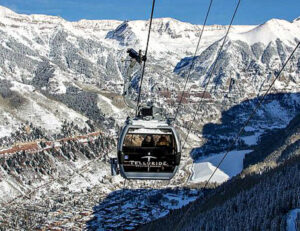
The clash between the ski patrol union and its wealthy out-of-town owner has intensified the debate over the chasm between the super-rich and everyone else in gilded resort towns like Telluride, where the median home price has soared to nearly $4 million since the pandemic.
Many workers have been priced out of Telluride and are unable to find subsidized housing. They have little choice but to commute an hour along treacherous mountain roads to get to the resort each morning.
Because the ski season runs from late November through April, most patrollers are considered seasonal workers who do not receive health insurance. Many spend the off-season working construction and maintenance jobs, or as mountain guides or in restaurants.
Many folks who live in overwhelmingly liberal Telluride – population 2,500, where utility boxes are plastered with “Eliminate Billionaires” stickers – say they support the ski patrol. As the patrollers marched down the main street in Telluride on Saturday, snowy peaks towering above them, bus drivers and chauffeurs for luxury rental services honked in support.
The strike and shutdown come during a bleak start to the winter for many Colorado ski resorts. Snow levels in Colorado are tied for the worst on record, and mountainsides around Telluride that would normally be gleaming white are brown and barren.
Tom Sokolowski, who at age 80 is one of Telluride’s oldest and longest-serving ski patrollers, said he got his start on the mountain in the early 1970s, long before the Four Seasons began selling $7 million “private residences” or restaurants served $150 Tomahawk steak dinners.
Sokolowski said he never paid more than $150 a month in rent – a far cry from the $1,500 a month that some newcomers now pay to rent a room. But he also said it was never easy to cobble together a living in a tourism-dependent town like Telluride, even before the likes of Oprah Winfrey and Tom Cruise began buying up large amounts of real estate.
“The ski bum life is almost done,” Sokolowski said. “That’s why we’re doing this.”
Mammoth Mountain Avalanche: The ski resort reopened Sunday morning following two days of closures due to avalanche danger.
Cole Murphy, a 30-year-old ski patroller, was out with another patroller performing avalanche mitigation work when the avalanche happened on Lincoln Mountain. Mammoth Mountain said the two of them were immediately taken to a nearby hospital.
Murphy died in the hospital. The second patroller was evaluated with possible broken bones.
The initial closure at Mammoth Mountain on Friday, Dec. 26 came after the two ski patrollers were caught in an avalanche on Lincoln Mountain at 7:30 am – prior to the resort’s scheduled opening.
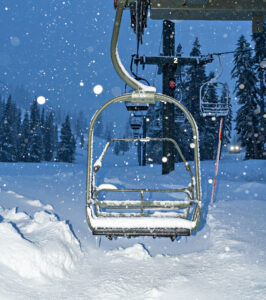
Mammoth reopened Sunday morning with lower mountain lift operations only. With deep snow on the mountain, resort officials ask guests to ski and ride with a partner, keep your group in sight, and avoid tree wells.
Sierra-at-Tahoe, Palisades Tahoe Open More Terrain: Thanks to the huge snowfall totals from the Christmas holiday storms, both resorts are predictably opening more terrain.
The storms brought over 6 feet of new snow to Palisades Tahoe, which opened runs Sunday on their upper mountain to the public. There is currently top-to-bottom skiing and riding via Mountain Run.
Palisades Tahoe says it will open Red Dog and Granite Chief lifts Monday and KT-22 and Scott are scheduled for Tuesday.
On Sunday afternoon, Sierra-at-Tahoe opened what many of its skiers and riders consider its best area – the West Bowl. Sierra says the additional terrain means that 80% of its trails – including two terrain parks – are now open for skiing riding on just day two of operations.
